Northern Lights in Kodiak
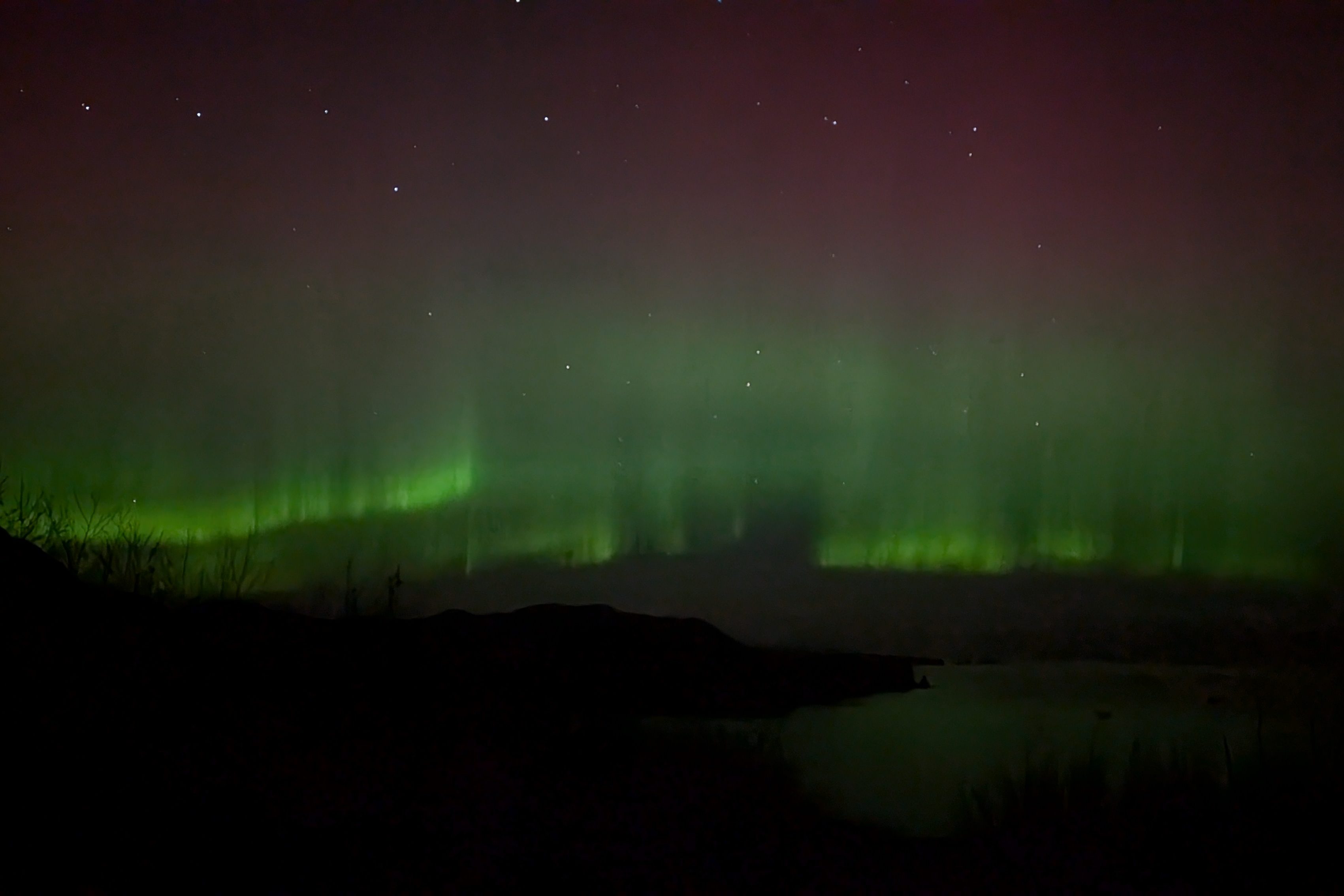
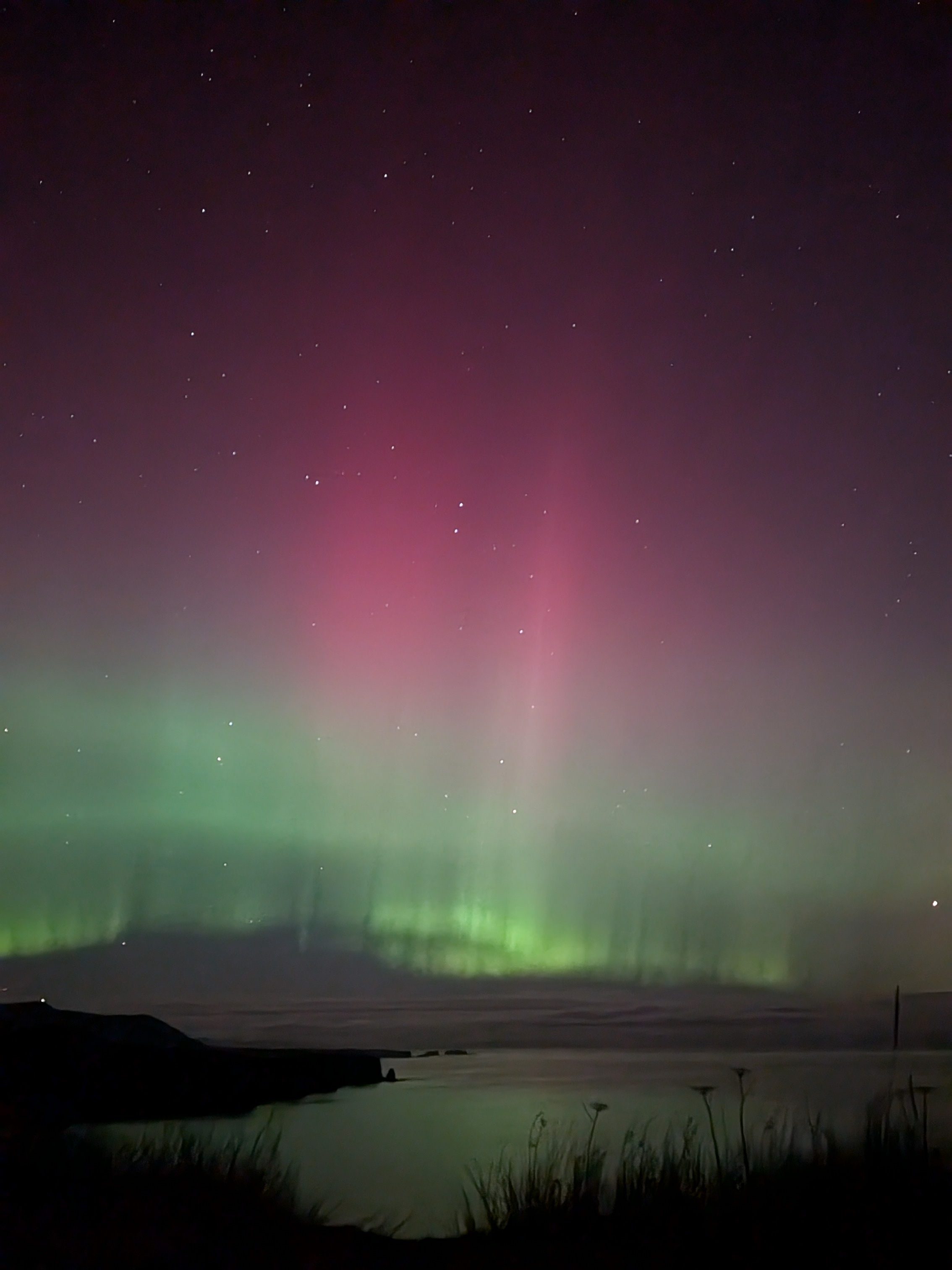
Watching the Aurora Borealis in Kodiak is magical. Whether it is a cloudy show or absolutely spectacular, it is a privilege to watch the lights in the sky dance every time. Keep reading for photos and tips on how to see them!
This page will discuss the following: where to view, a spectacular show, predicting the Aurora, weather conditions to look for, how to take photos, and a photo gallery.
Where to watch the Northern Lights:
The northern lights can be seen directly overhead during particularly spectacular storms, but, more often, lights are viewed above the northern horizon. Finding a good location to watch the Norhtern Lights in Kodiak can be difficult because the city and road system are located on the southeast side of the island, with tall mountains obscuring the north and west skies. When looking to view them in Kodiak, try for a location with high elevation, low light pollution, and clear skies to the north.
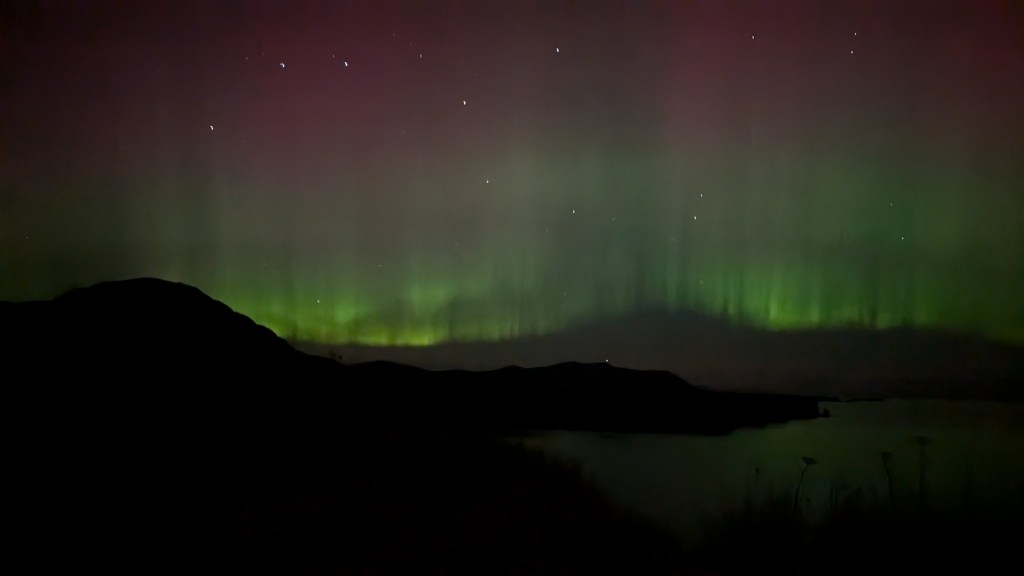
The most popular place to view the lights, and my go-to, is Monashka Bay Lookout. This is a pull off directly across the road from the steep North Sister Mt. trailhead. It overlooks Monashka Bay and Monashka Mt.
This is a great spot because light pollution from the City of Kodiak is hidden behind Pillar Mt. to the south and the northern horizon is largely unobstructed by mountains.
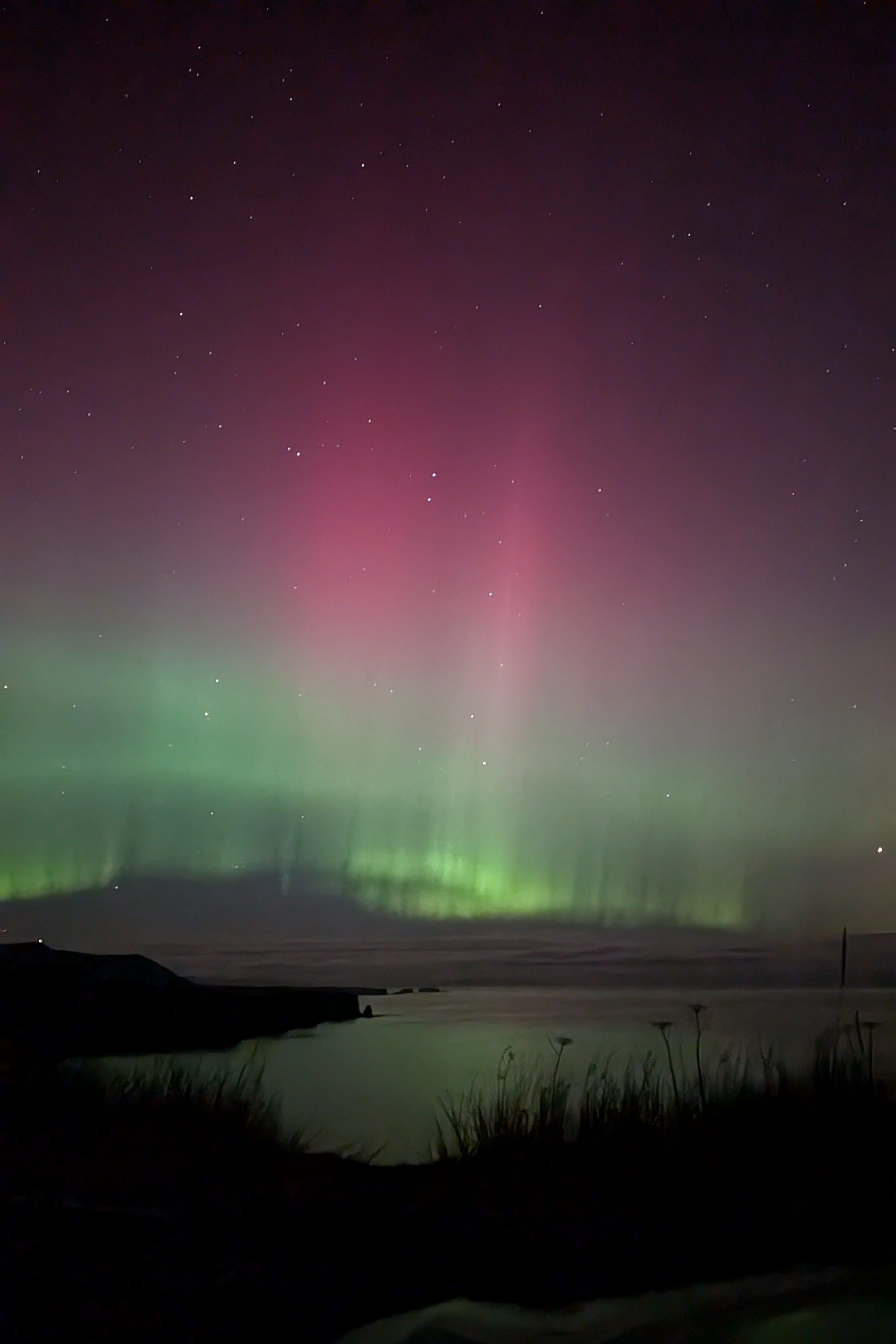
In the photo, lights glow over Monashka Mt. and reflect in still water on Monashka Bay.
BE CAREFUL of the road in winter.
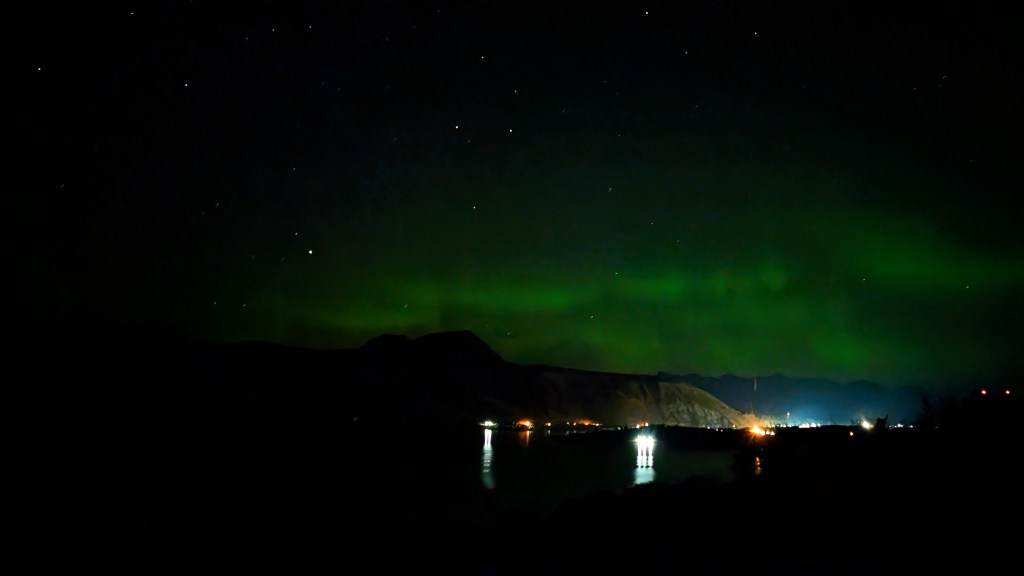
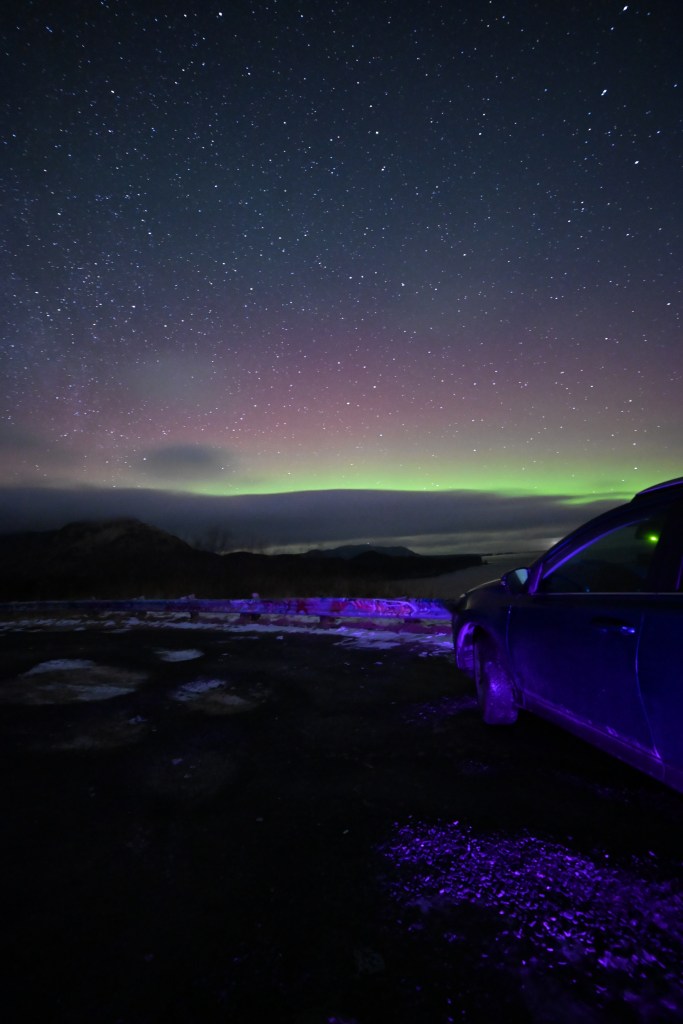
The lights can also be viewed over Coast Guard BASE KODIAK and Old Woman Mt. from a lookout 0.8 miles down the road from the Salonie Creek bridge. I took this photo in the early hours of the morning, before dropping people off at the airport.
This is a decent spot to view the lights because there are relatively few northern obstructions. However, the lights from the Coast Guard air station add significant light pollution.
More potential viewing options I have not done:
Pillar Mt.
Some people also opt to watch the lights from the top of Pillar Mt. This is a good option because City of Kodiak light pollution us to the east southeast and your elevation is over 1000ft. The lights would be visble about the Three Sisters and Devil’s Prongs. Although this road is closed in winter.
Chiniak
Chiniak would be a great place to view the light because there is minimal surrounding light pollution and the massive Chiniak Bay creates a clear northern horizon. It would be very easy to find a north-facing beach to watch the lights and camp overnight. However, elevation is low, so more distant light shows may not be as easy to view.
A mountain
The final option would be to hike up a mountain with good views to the north with camping gear. Then enjoy the Aurora at your campsite. This would be epic but is definitely the most arduous.
A Spectacular Show:
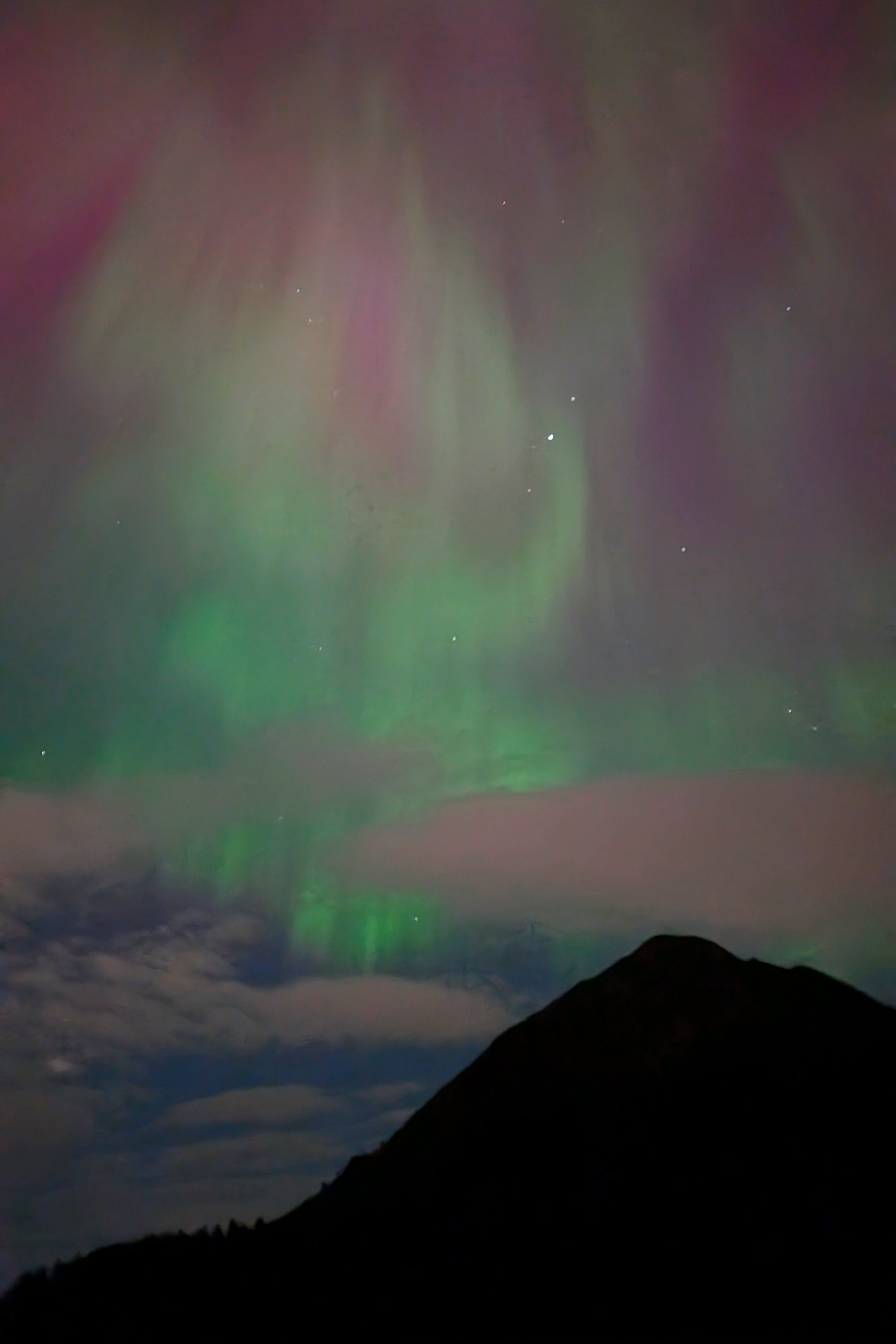
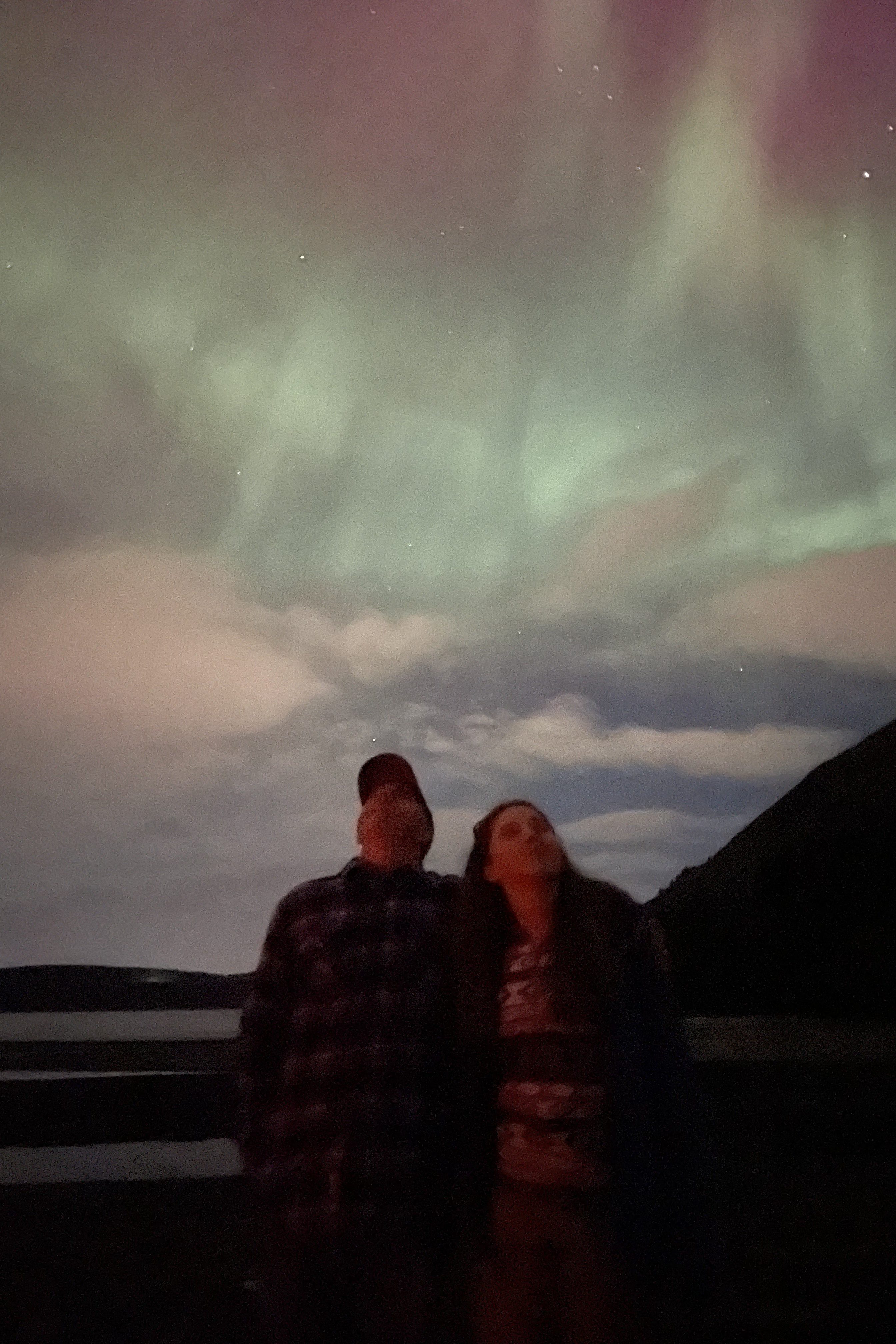
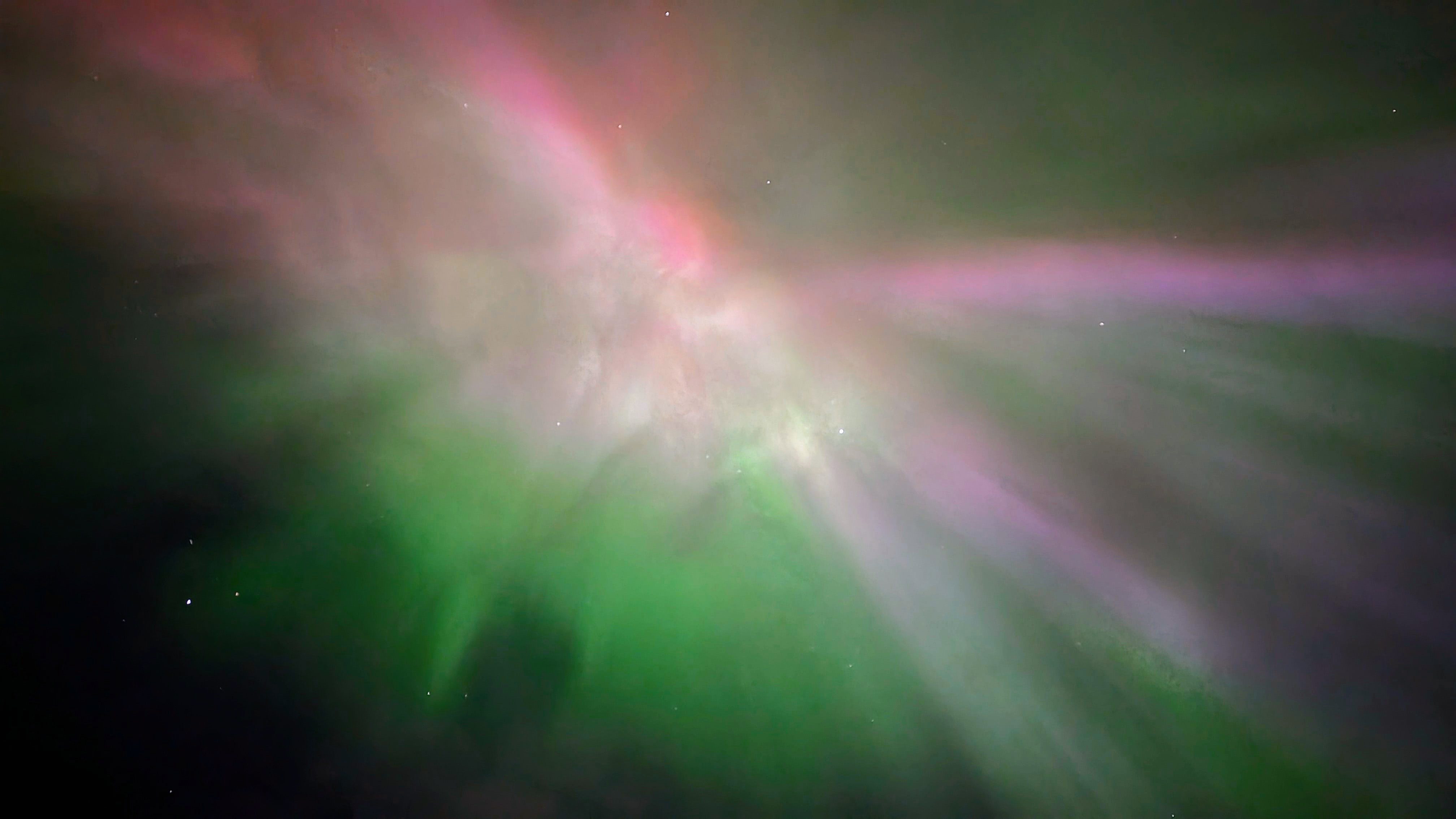
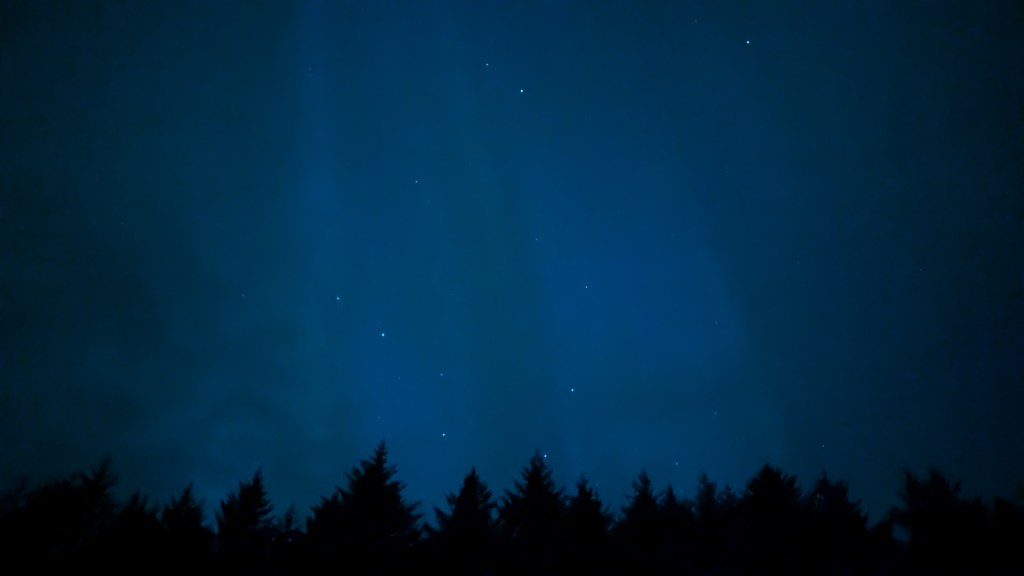
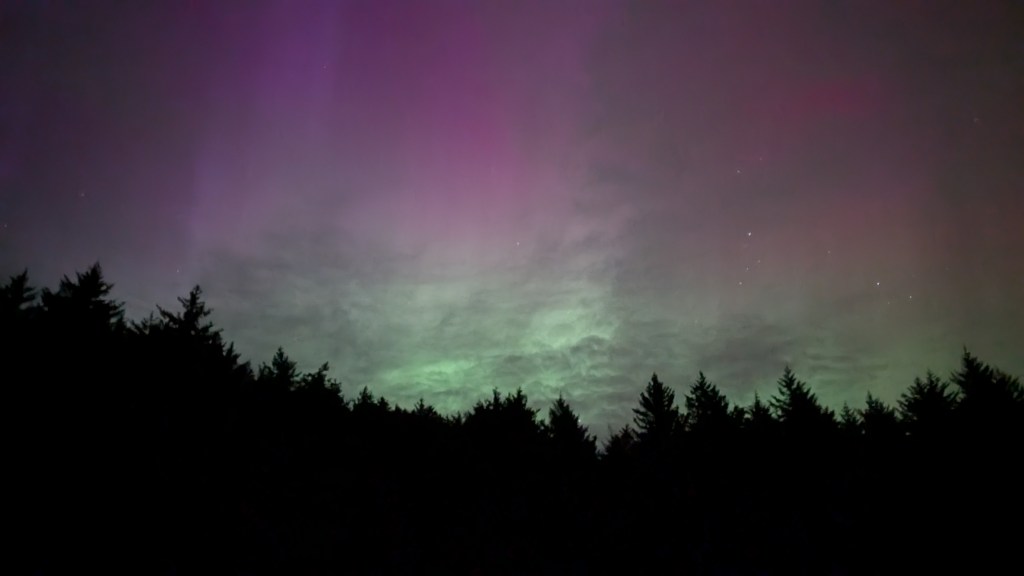
The most impressive northern lights show I have ever seen happened unexpectedly in October 2024. We were having a campfire on White Sands Beach. The northern lights forecast was mediocre, Kp of 3-4. Just after sunset we started to see blue streaks, so we waited until total darkness and saw this fantastic Aurora explosion. The northern lights filled the entire sky and were pulsing rapidly above. It was so intense that the first two photos were taken over North Sister Mt. facing south! The starburst looking photo was taken by me laying on the sand, phone camera facing straight up at the sky.
Predicting the Aurora:
Short of it: the higher the KP where you are, the brighter the northern lights. KP of 4 is good, 5 and higher is great. The resources below help you see past and future Aurora activity and location.
Science: The northern lights are created by solar wind interacting with Earth’s magnetic field. The Sun’s outermost layer, the corona, releases plasma from the corona into the solar system. The plasma, composed mainly of charged particles such as protons and electrons, is known as solar wind. Where the solar wind and Earth’s magnetic field are aligned opposite to each other, solar wind electrons excite electrons in the magnetosphere. These magnetosphere electrons travel along Earth’s magnetic field and collide with atoms in the atmosphere, releasing photons. These photons are particles of light, which we see as the Aurora Borealis.
While solar wind constantly interacts with Earth’s magnetic field, intensity of the northern lights is greater when the solar wind moves faster and is denser. Keep a lookout for reports on upcoming solar windstorms, called Coronal Mass Ejections (CME) or coronal holes. These occur when the Sun has unusually high activity, potentially leading to breathtaking, active, and intense auroras. The Aurora App will show past solar wind data.
The best way to predict the northern lights is to look at the Earth’s geomagnetic disturbance. The geomagnetic index is measured in three-hour intervals ranging from 0 to 9, called the Kp index. Charged particles from solar wind carry electric currents in the Earth’s ionosphere. These currents disturb Earth’ magnetic field, increasing Kp. The greater the solar wind, the greater the disturbance, the greater the Kp, the brighter the Aurora! A Kp of 4 will produce good northern lights. Kp of 5 and above is considered a geomagnetic storm. Three key resources for see past and predicted Kp are below!
Information above sourced from NOAA’s Aurora Tutorial
Aurora App
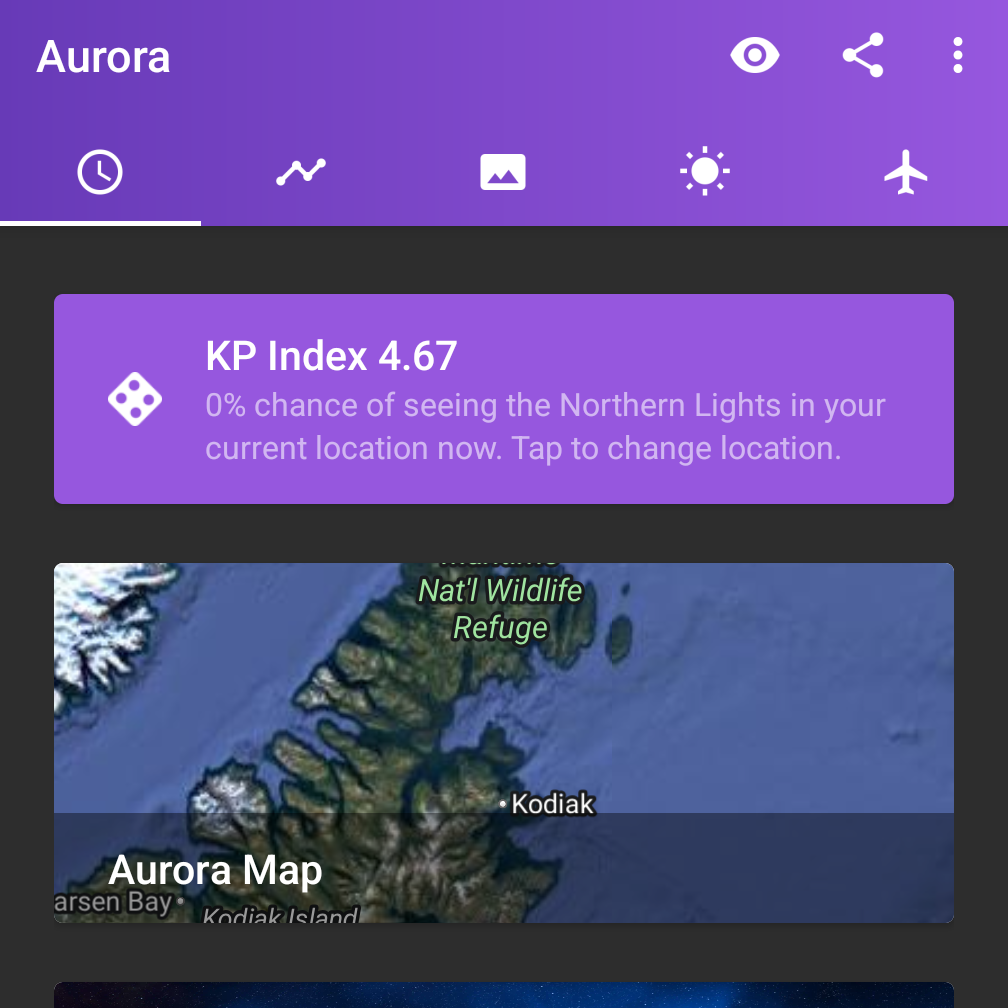
This is a great app, available on IOS or Android. From the home page, you can see where the aurora is in the world and live webcams of the northern lights. On the graph tab, you can see past, present, and predicted data. You can also get real time notifications when the lights are out.
NOAA Aurora Dashboard
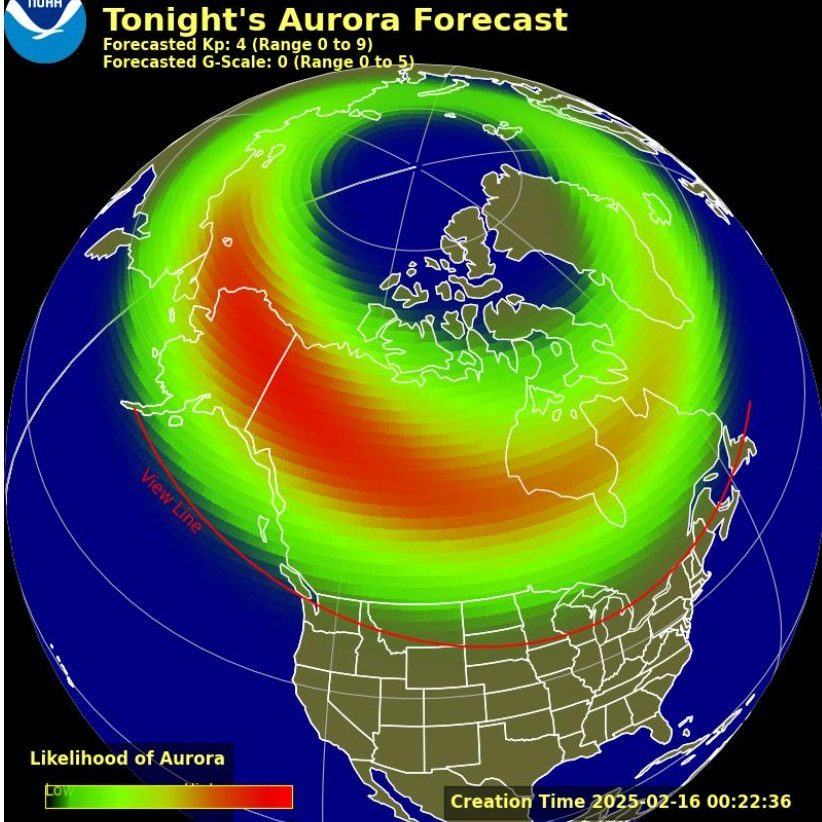
This shows Aurora predictions in several different ways. The one featured in the photo shows a still shot the highest predicted Kp over the entire night. There are also maps that illustrate how the northern lights traveled around the poles and their intensity.
University of Alaska
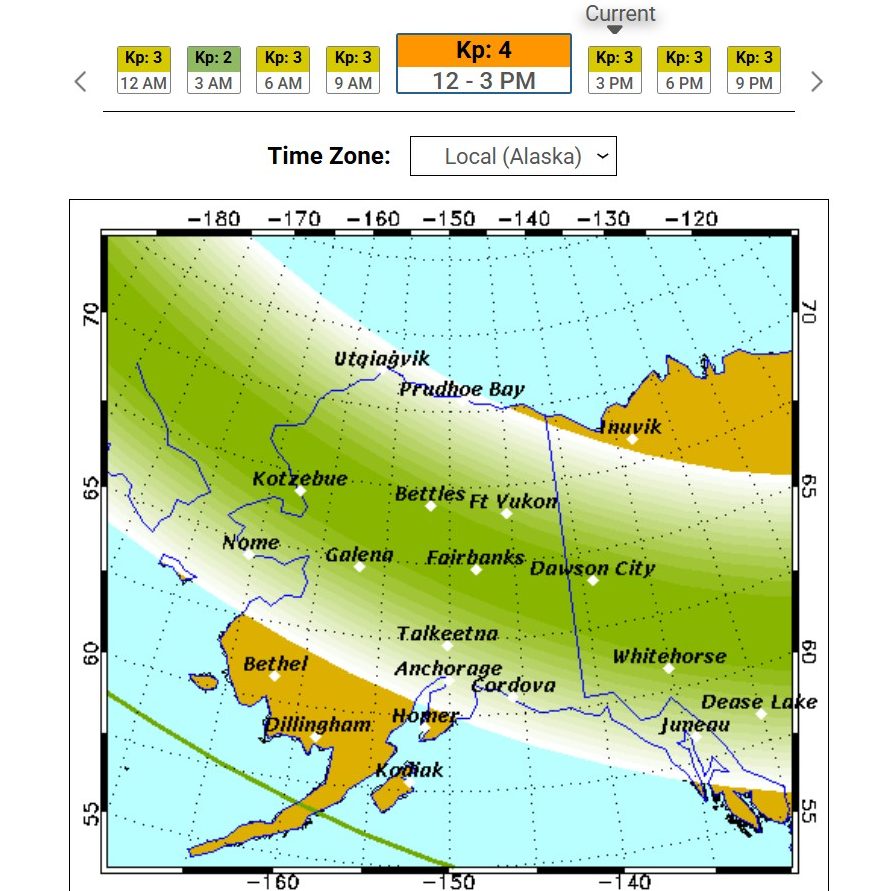
This is a prediction produced by the University of Alaska Fairbanks. It shows predictions and historical data via visual snapshots of where they can be seen over different parts of the world based on the Kp.
Weather Conditions:
Desired weather conditions for the northern lights are pretty simple. You want three things, clear skies, low Moon illumination, and darkness.
Clouds
Checking for clouds is pretty simple, just go outside! You can see the Northern lights even if there are some clouds, as long as there are clear skies to the north. However, clouds are unpredictable. So even if there scattered clouds, I often still venture to see the lights to see if the northern skies are clear or the clouds will part eventually.
Moon Brightness
Moon illumination increases light around you, reducing the number of stars visible in the sky and relative brightness of the northern lights. You can check your regular weather apps information on moon rise and moon set to see if the moon will be in the sky. If the moon will be in the sky, check the moon’s phase and illumination to see how bright it will be.
Sunlight
Finally, it must be dark outside to see the northern lights. Places closer to Earth’s poles will often have too much light at night to see the Aurora in the summer. After sunset there are four stages of darkness: civil twilight, nautical twilight, astronomical twilight, and true night. In Kodiak’s summer, the sun only sets enough for nautical twilight.
How to Take Photos:
Taking photos of the northern lights with a phone is pretty easy. Put your phone on Night Sight/Night Mode, point it at the sky while holding still, and take the photo!
Taking a photo on a camera is relatively simple as well. The best lenses for northern lights photos are wide angle lenses with f/ 2.8 or less. I have a 14mm lens which works quite well. Make sure you have a tripod and either have a remote or a 2-3 second delay to minimize shaking of the camera. Your shutter speed and ISO will change with the brightness of the light, and the type of photo you are trying to take of them. Good starting ranges for shutter speed, ISO, and f/ are as follows: 2-10s, 1600-3200, f/ as low as possible.
Fun fact! Four of Jupiter’s moons have the Aurora: Io, Europa, Ganymede and Callisto.
More pictures from Kodiak:



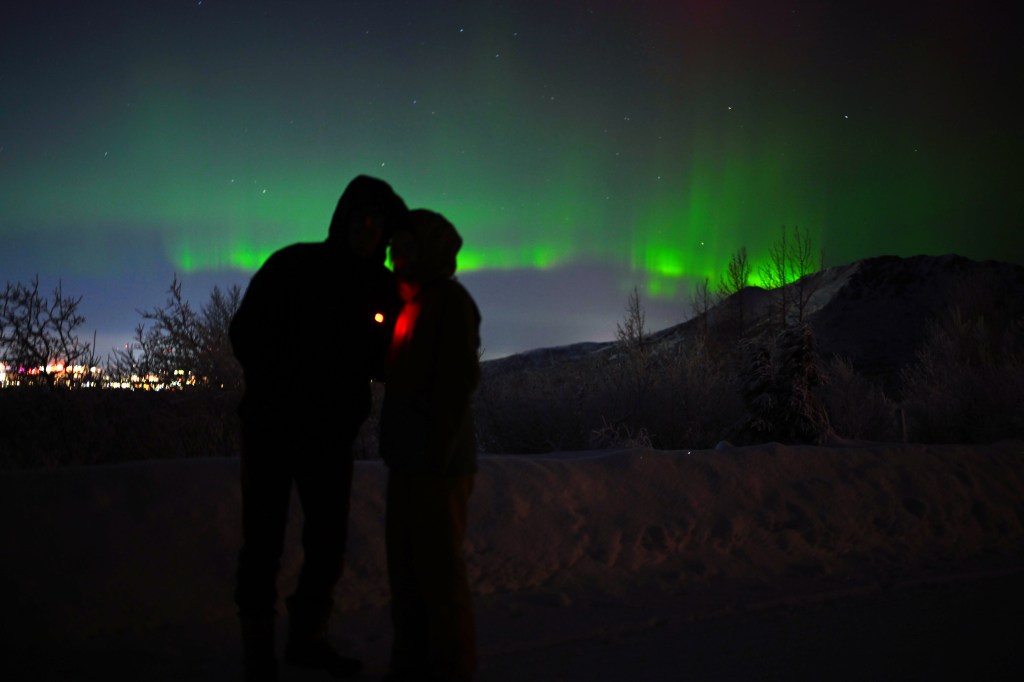
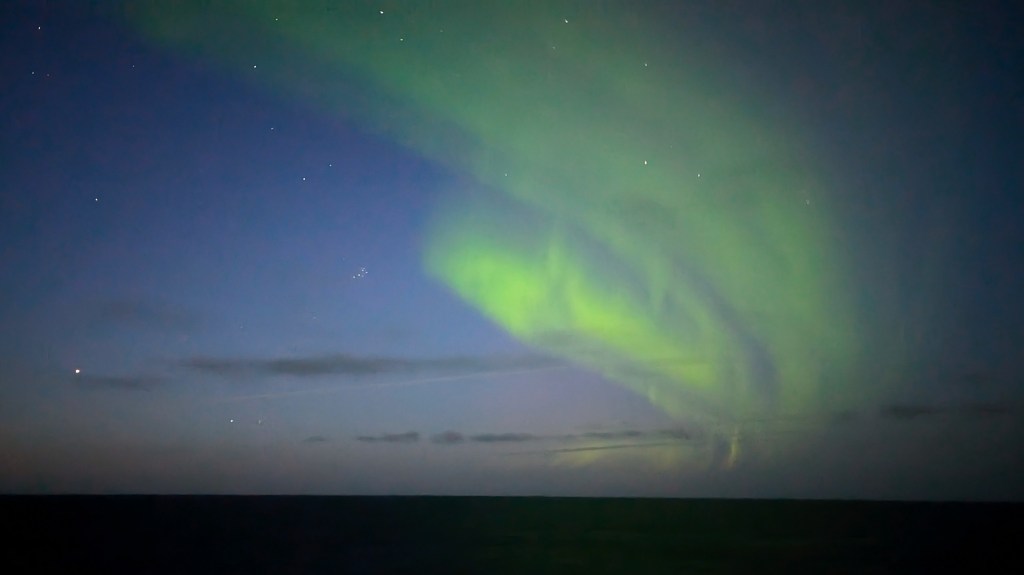
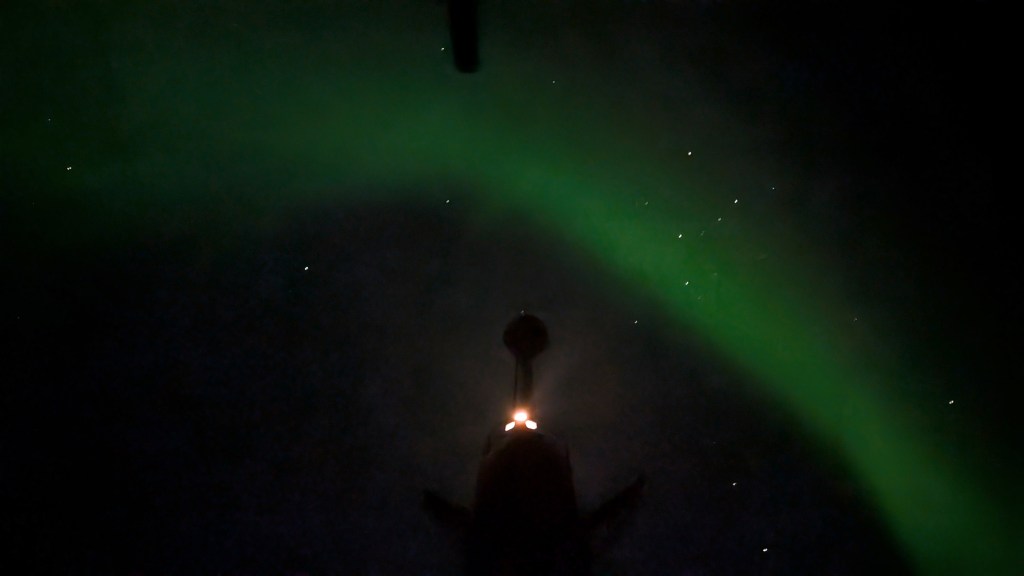
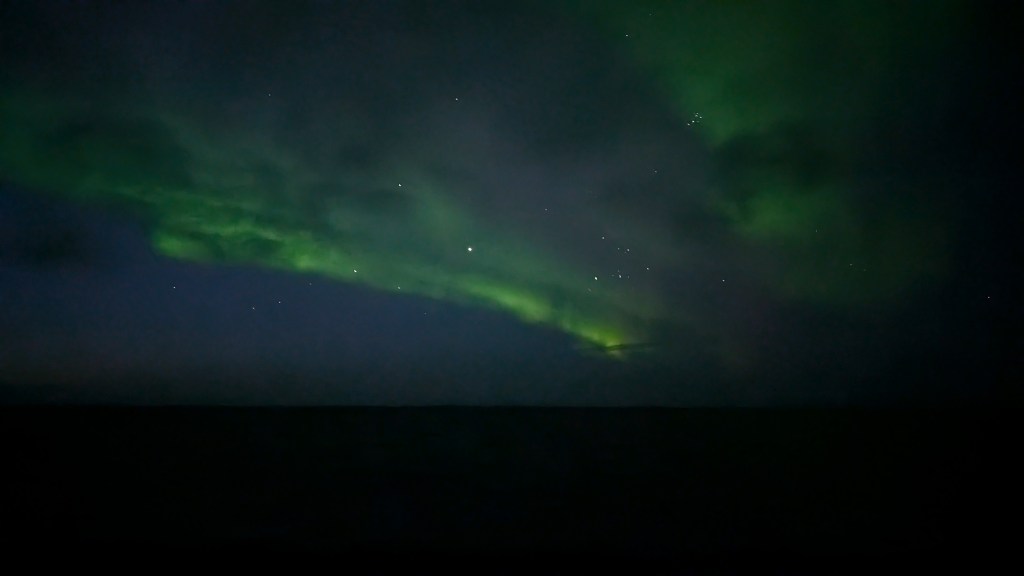
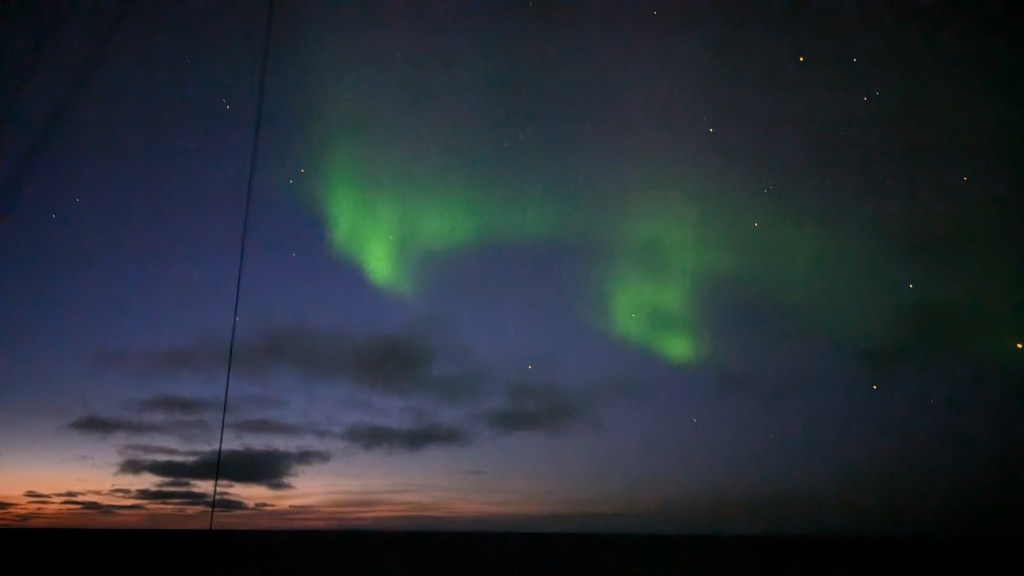
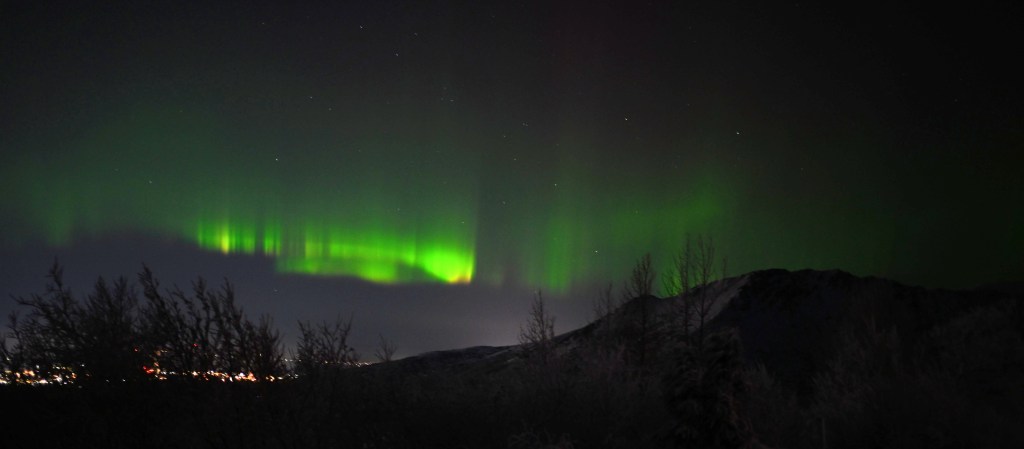
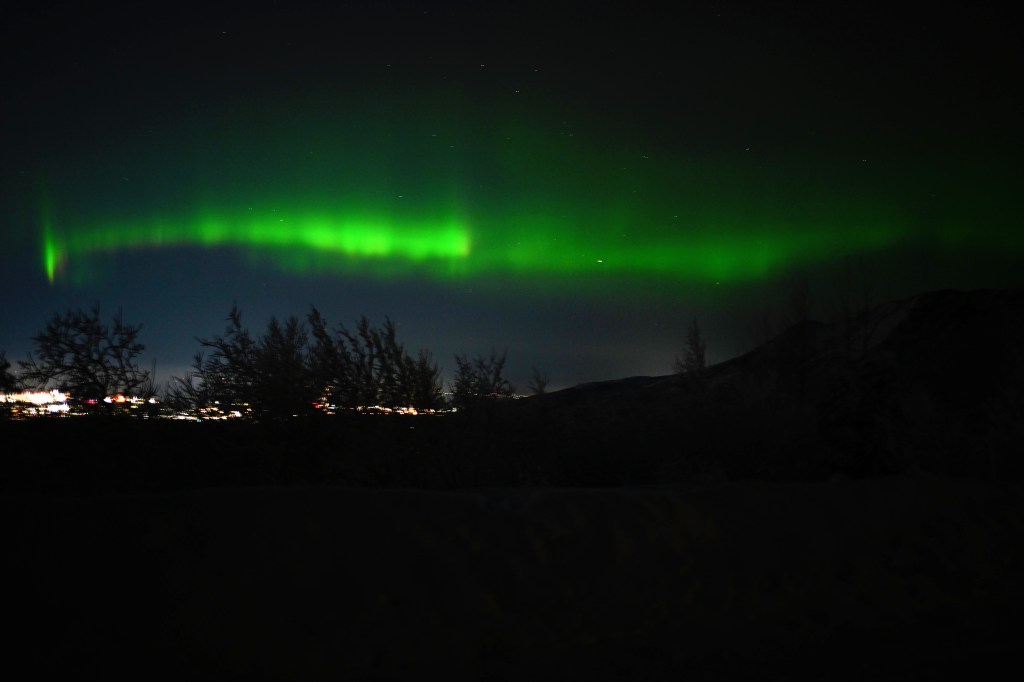
Northern Lights in Anchorage and Arctic Ocean:


 My Kodiak Adventures