Stargazing
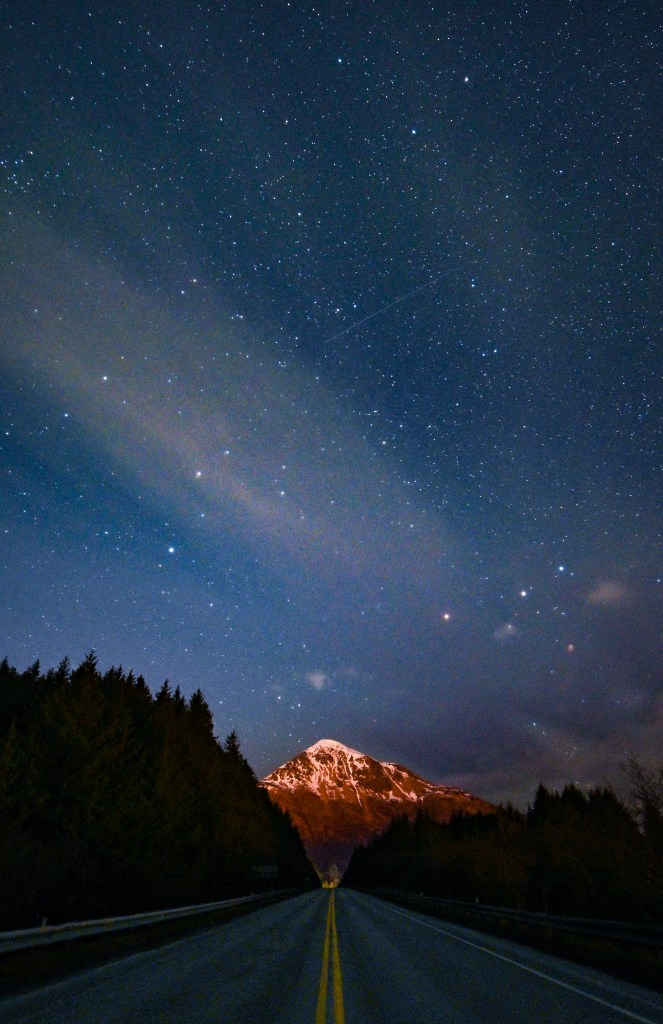
Stargazing in Kodiak is often quite beautiful. Since I have lived here, I learned how to find the perfect times to watch the stars dazzle in the night sky.
Summer Sun:
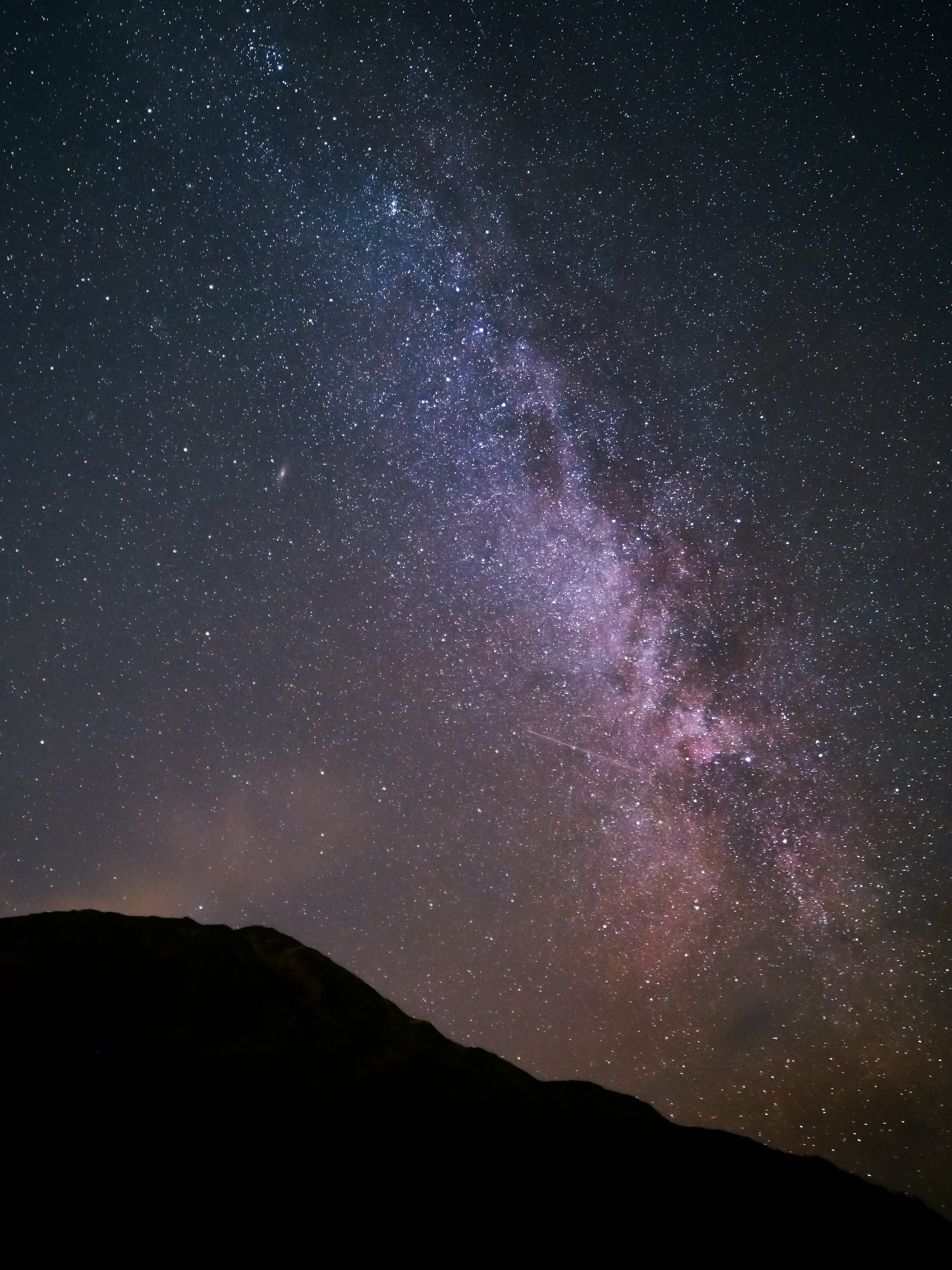
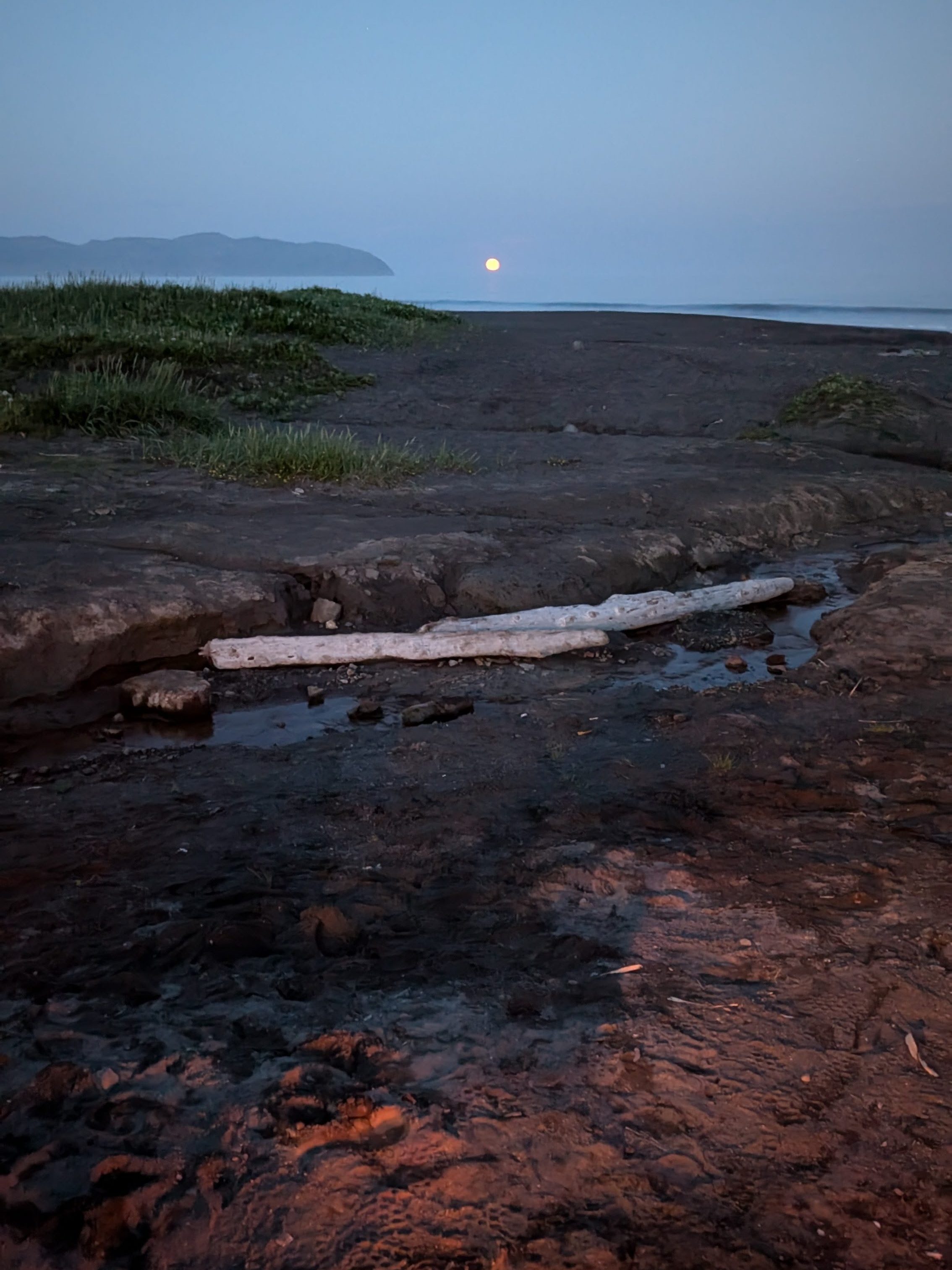
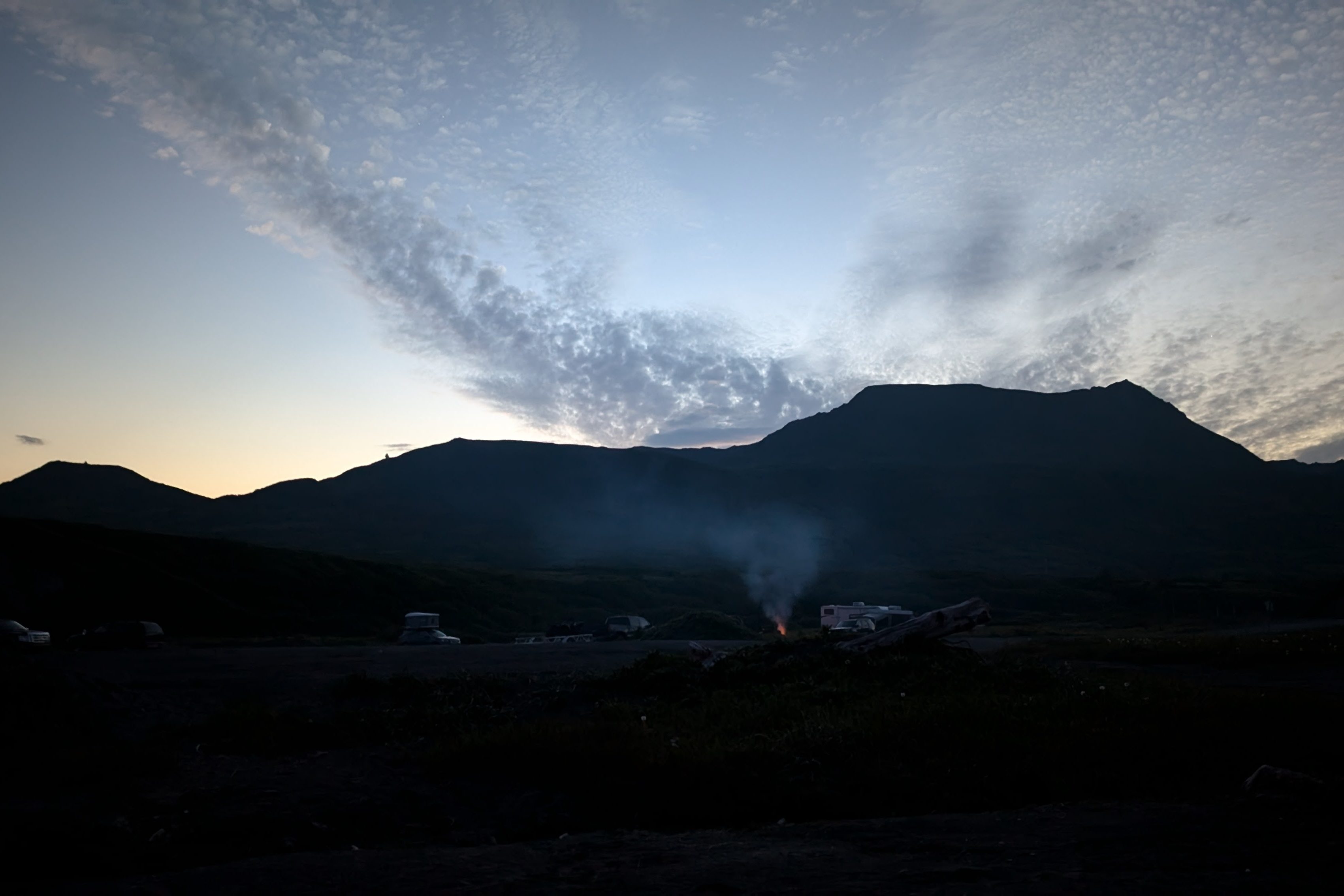
In the Acrtic Circle, the Sun never fully sets in the height of summer. In Sub-Arctic or high latitude places like Kodiak, the Sun sets in the summer, but light from just below the horizon never leaves the sky. The night-less season lasts from mid-April until mid-August in Kodiak.
This means Kodiak does not experience true night during the summer. Above you can see the difference between true night on the left and the moon rise on in the middle of the night during summer. Both the moonrise and the following sunset mountain photo were taken on my phone while camping on the beach at 1:15am, Kodiak’s brightest day of the year 2024.
How to Take Photos:
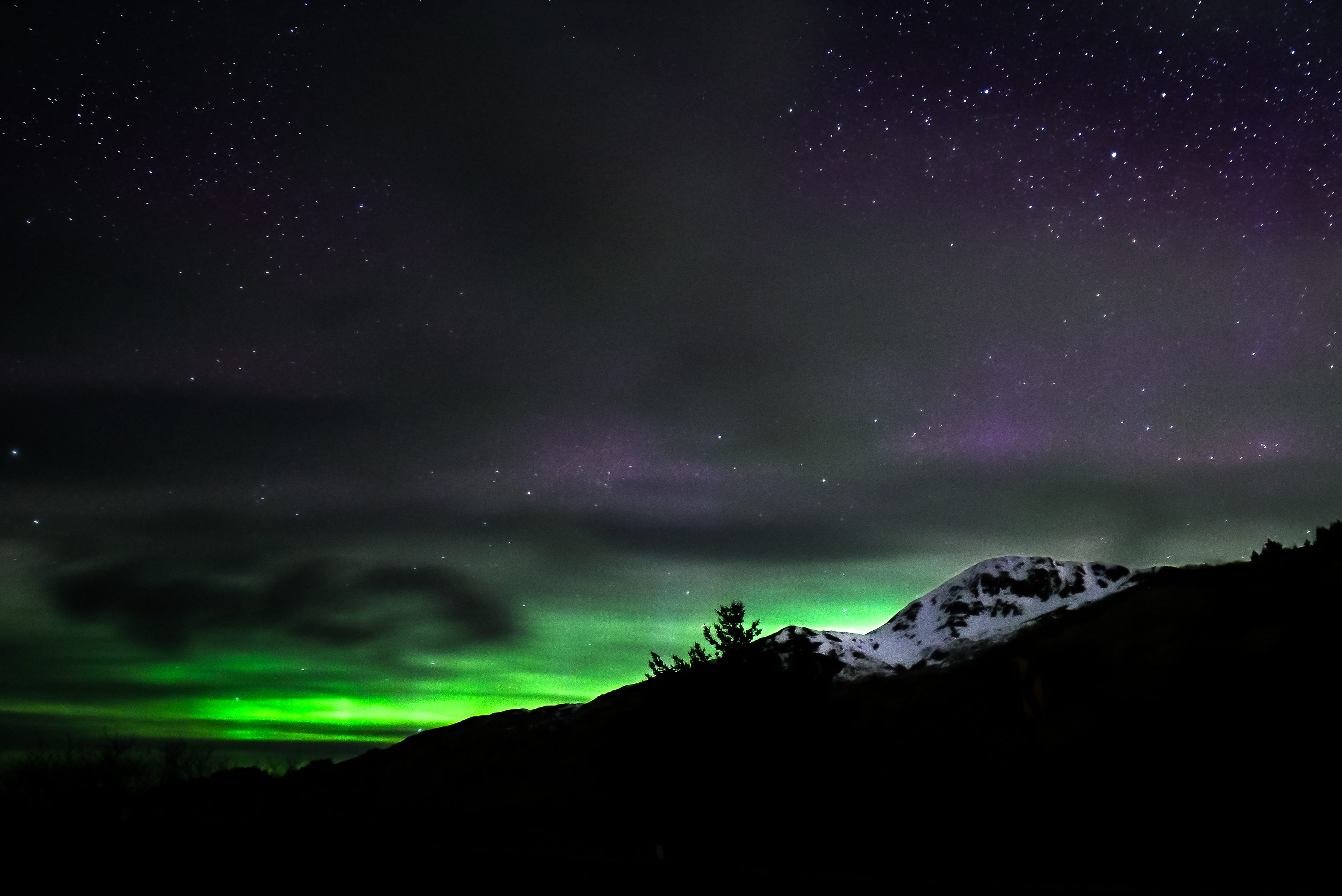
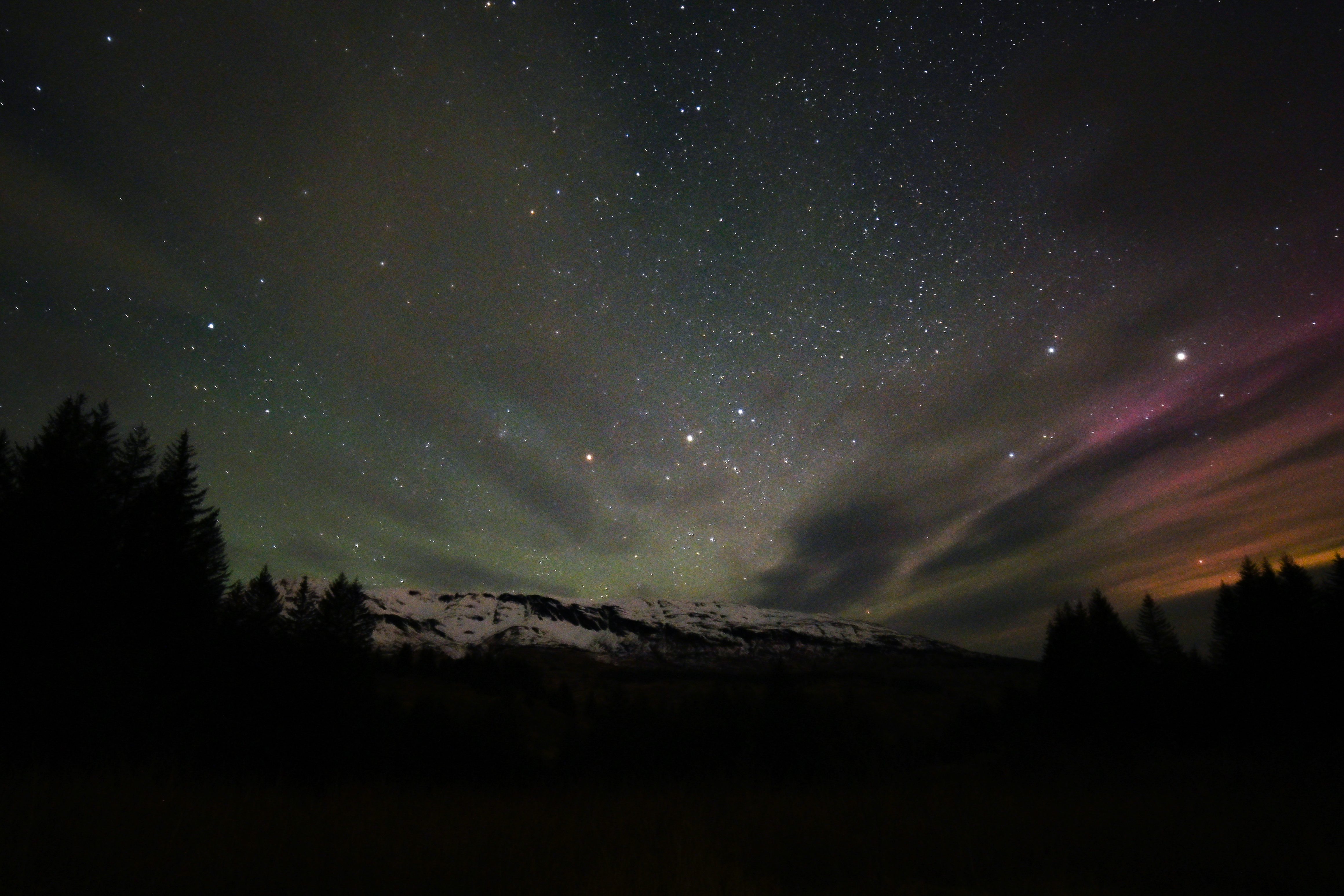
Taking a decent photo on a camera is relatively simple. The best lenses for star photos are wide angle lenses with f/ 2.8 or less. I have a 14mm f/2.8 and a 35mm f/1.4 lenses which work quite well. Make sure you have a tripod and either have a remote or a 2-3 second delay to minimize shaking of the camera. Your shutter speed and ISO will change with the brightness of the light, and the type of photo you are trying to take of them. Good starting ranges for shutter speed, ISO, and f/ are as follows: 20-25s, 1600-3200, f/ as low as possible.
In the future I will learn how to take multiple photos and stack them. This helps get a clearer, more detailed images. Some early mistakes I made (that you can see in some photos) were not shooting in RAW or adjusting the white balance. Learn from my mistakes and take epic photos!
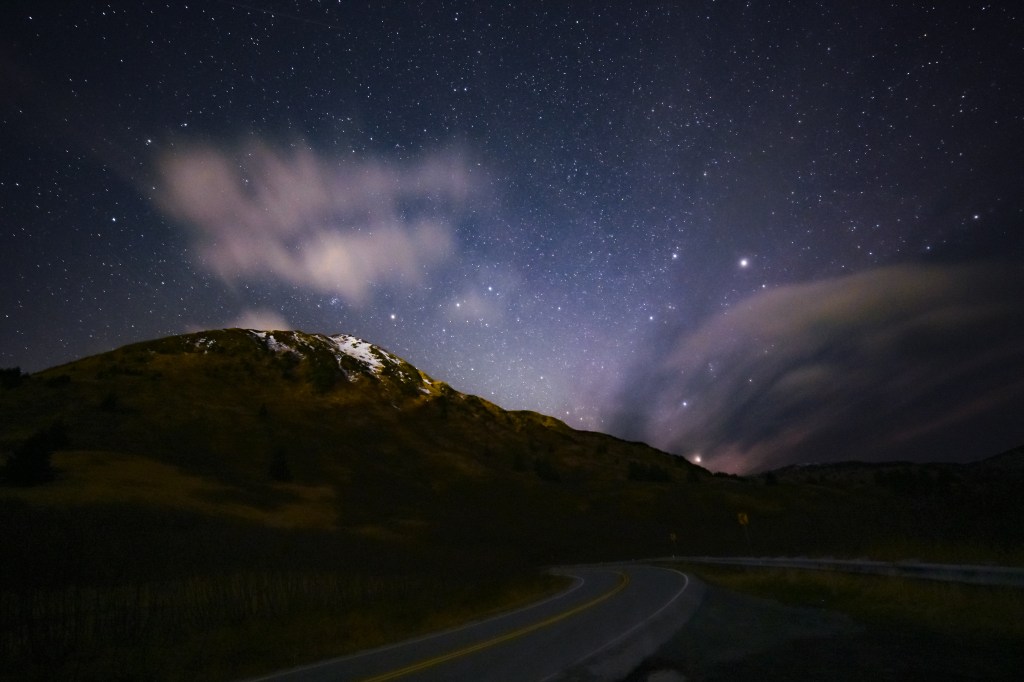
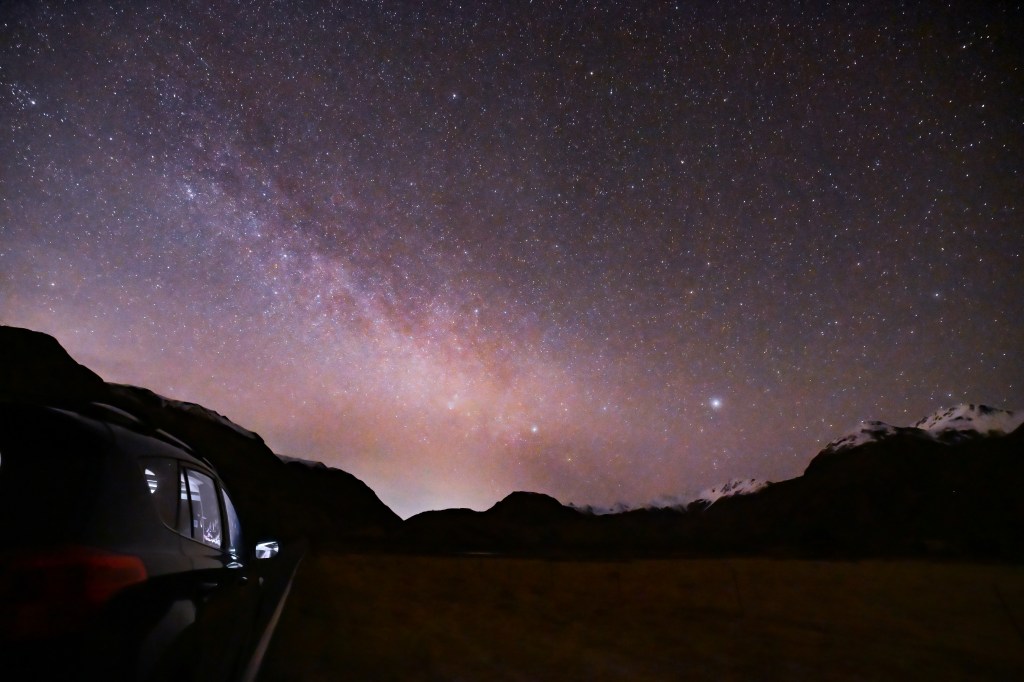
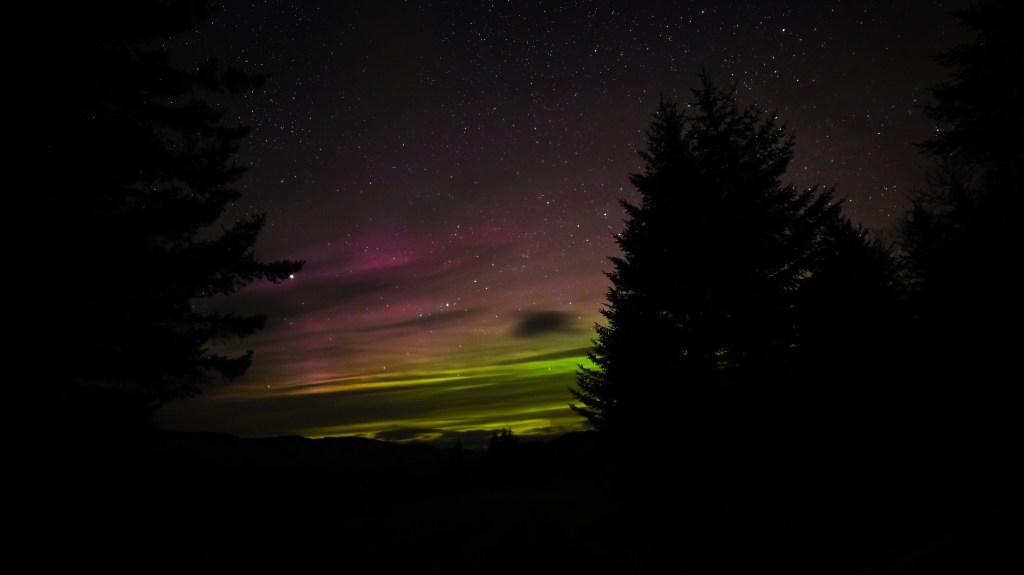
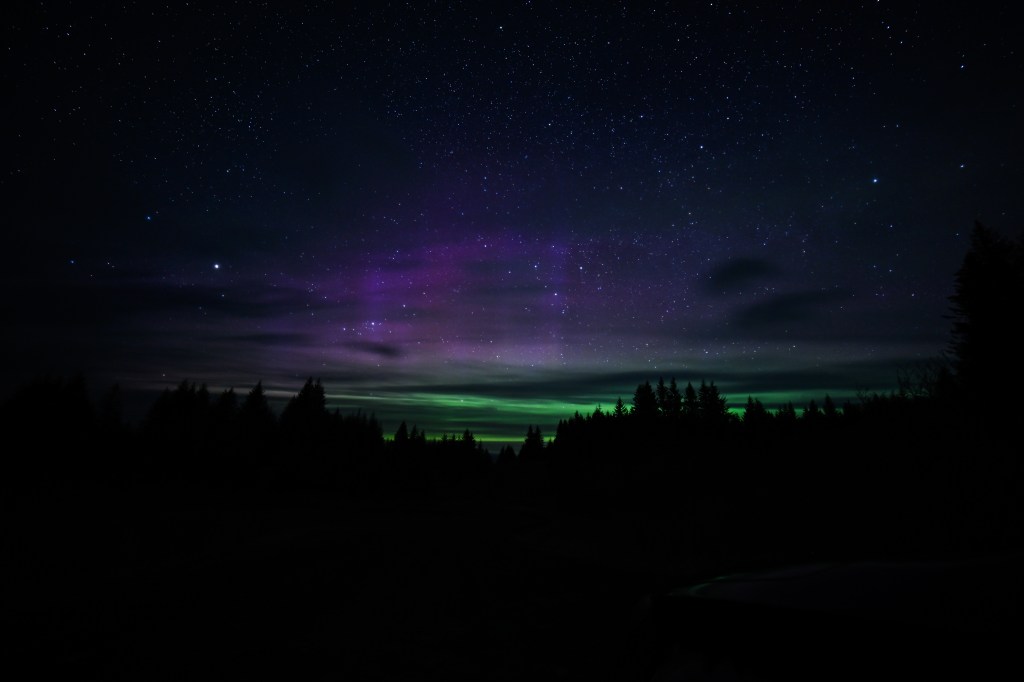
Often, I get a surprise of Northern Lights in my star photos!
Weather Conditions:
Just like looking for the Northern Lights, going out during the right weather conditions is key. You need three things, clear skies, darkness (lack of residual sunlight), and low Moon illumination.
Clouds
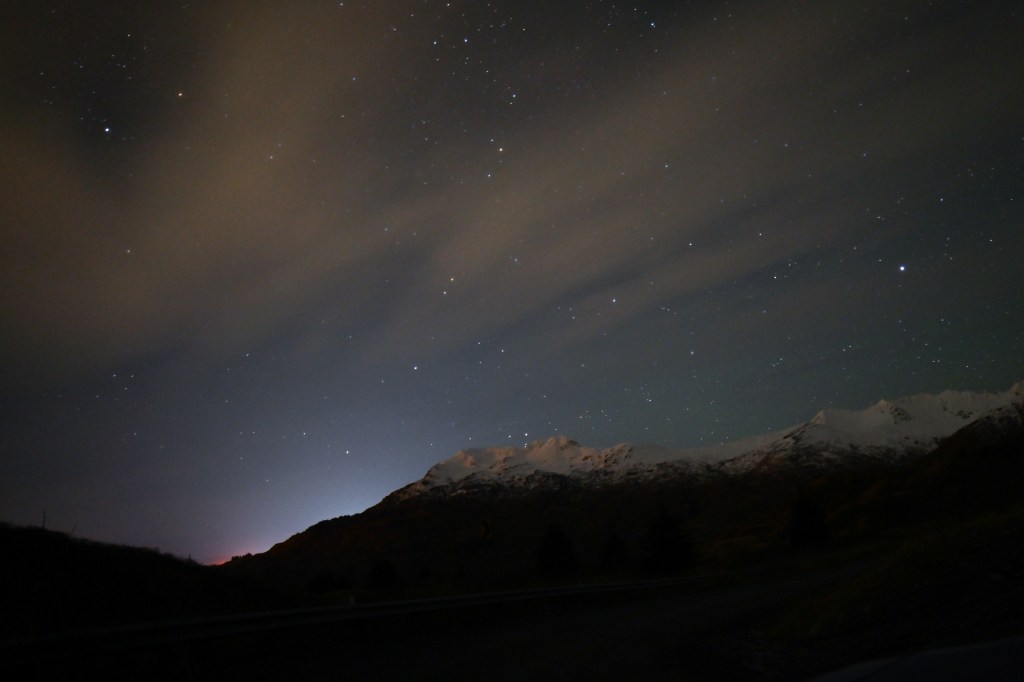
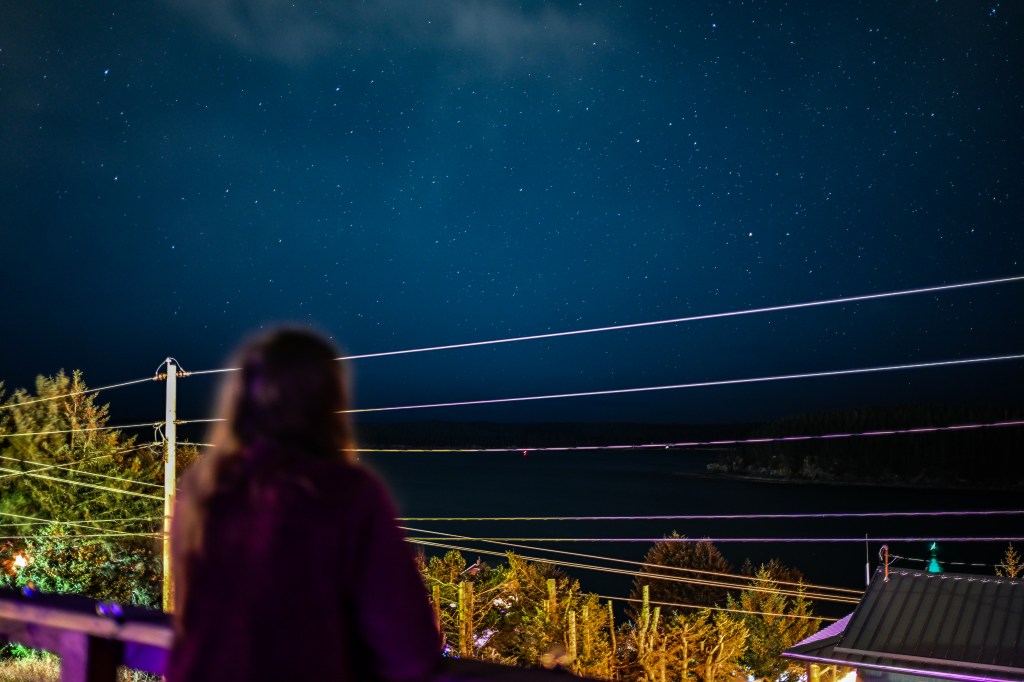
Checking for clouds is pretty simple, just go outside! Or check Windy or another weather app to look at predicted cloud coverage. Ideally you should go out on a crystal-clear night. But you can see the good stars even if there are some clouds, as you can see from photos on this page, clouds can lead to some pretty interesting views, especially in photos taken by a camera with long exposure.
Moon Brightness
Moon illumination increases light around you, greatly reducing the number of stars visible in the sky. You can check your regular weather apps information on moon rise and moon set to see if the moon will be in the sky. If the moon will be in the sky, check the moon’s phase and illumination to see how bright it will be. Ideally you stargaze when the moon is not out or not bright.
Sunlight
Finally, it must be dark outside to see the full force of the stars. In norhtern places, the sun never sets in the summer, making fall, winter, and spring the only times to stargaze. After sunset there are four stages of darkness: civil twilight, nautical twilight, astronomical twilight, and true night. You can find what time true darkness unfolds by searching your location on TimeandDate.
Finding the Milky Way

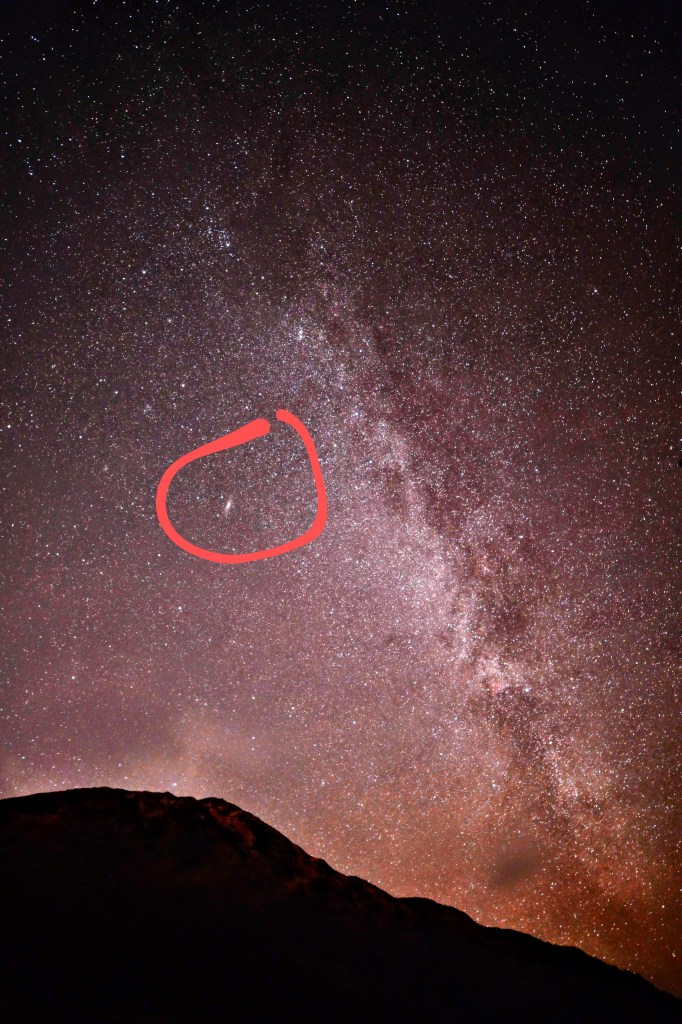
The best times to view the Milky Way in the Northern Hemisphere is March through September. That is when the view night sky is oriented inward towards the densest part of the Milky Way. To find the Milky Way you can use helpful apps like Stellarium. To find specific constellations you can fuse helpful apps like Sky Map. The circled bright spot above is the Andromeda Galaxy!
Enjoy observing the night sky!

 My Kodiak Adventures